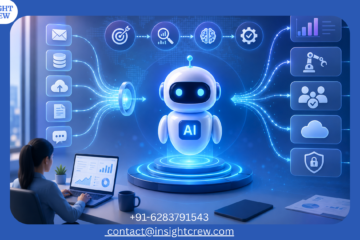
Orchestration matters because AI agents are no longer single models answering prompts—they are systems of models, tools, memory, workflows, and humans that must work together reliably. Without orchestration, AI agents quickly become brittle, expensive, unsafe, or impossible to scale.
Below is a structured explanation of why orchestration matters, the common challenges in deploying AI agents, and practical solutions.
1. What Is AI Agent Orchestration?
Orchestration is the coordination of:
- Multiple AI agents or models
- Tool usage (APIs, databases, code execution)
- Control flow (planning, branching, retries)
- Memory and state
- Monitoring, safety, and human oversight
Think of it as the operating system for AI agents.
2. Why Orchestration Matters
Without orchestration:
- Agents act unpredictably
- Costs spiral
- Errors propagate silently
- Systems fail under real-world conditions
With orchestration:
- Agents become reliable, scalable, auditable, and safe
- Complex tasks can be broken into manageable workflows
- Human trust and governance are possible
3. Common Challenges in Deploying AI Agents (and Solutions)
3.1 Uncontrolled Agent Behaviour
Challenge
- Agents hallucinate actions
- Infinite loops or tool misuse
- Agents take unsafe or unintended actions
Why it happens
- No centralised control
- No execution limits
- Poor role definition
Orchestration Solutions
- Explicit agent roles and boundaries
- Step limits and execution budgets
- Policy-based action validation
- Human-in-the-loop checkpoints for high-risk actions
3.2 Poor Task Decomposition
Challenge
- Agents try to solve everything in one step
- Complex tasks fail silently
- Hard to debug failures
Why it happens
- Monolithic agent design
- No planner/executor separation
Orchestration Solutions
- Planner–Executor architectures
- Hierarchical agents (manager → workers)
- Workflow graphs (DAGs) instead of linear prompts
- Explicit success/failure criteria per step
3.3 Tool Chaos and Integration Failures
Challenge
- Agents call the wrong tools
- APIs fail or return unexpected outputs
- No retries or fallback strategies
Why it happens
- Tools are treated as “magic”
- No structured tool contracts
Orchestration Solutions
- Strongly typed tool interfaces
- Tool schemas and input validation
- Retry, timeout, and fallback logic
- Tool selection guards
3.4 Memory and Context Explosion
Challenge
- Token limits exceeded
- Irrelevant or outdated memory pollutes decisions
- Privacy or compliance risks
Why it happens
- Everything is shoved into the prompt
- No memory lifecycle management
Orchestration Solutions
- Short-term vs long-term memory separation
- Retrieval-based memory (RAG) instead of full context
- Memory pruning and summarisation
- Explicit memory write/read policies
3.5 Lack of Observability and Debugging
Challenge
- Failures are opaque
- Hard to reproduce issues
- No insight into agent reasoning
Why it happens
- LLMs are treated as black boxes
- No tracing or logging
Orchestration Solutions
- Structured logs of:
- Prompts
- Tool calls
- Decisions
- Execution traces and replay
- Metrics (latency, cost, success rate)
- Versioned prompts and workflows
3.6 Cost and Latency Blowouts Challenge
- Excessive API calls
- Slow multi-agent systems
- Unpredictable cloud bills
Why it happens
- No budgeting or throttling
- Redundant reasoning steps
Orchestration Solutions
- Token and cost budgets per task
- Caching intermediate results
- Model routing (cheap model → expensive model only if needed)
- Parallel execution is safe
3.7 Safety, Compliance, and Trust Challenge
- Agents violate policies
- No audit trail
- Hard to prove compliance
Why it happens
- Safety is bolted on afterwards
- No centralised enforcement
Orchestration Solutions
- Pre- and post-action safety checks
- Policy engines for allowed actions
- Immutable audit logs
- Human approval for regulated decisions
3.8 Scaling from Demo to Production Challenge
- Works in a notebook, fails in production
- Environment drift
- Non-deterministic behavior
Why it happens
- Lack of versioning and testing
- No CI/CD for agent workflows
Orchestration Solutions
- Versioned agents, tools, and prompts
- Automated tests for agent behaviour
- Staging environments
- Canary deployments and rollbacks
4. Key Orchestration Patterns That Work
| Pattern | Use Case |
| Planner–Executor | Complex, multi-step tasks |
| Supervisor Agent | Monitoring and correction |
| DAG Workflows | Predictable business processes |
| Event-driven Agents | Real-time systems |
| Human-in-the-loop | High-risk decisions |
5. Business Impact of Good Orchestration
- Higher reliability → fewer failures
- Lower costs → controlled compute usage
- Faster iteration → easier debugging
- Regulatory readiness → auditability
- User trust → predictable behaviour
6. Bottom Line
AI agents without orchestration are impressive demos.
AI agents with orchestration are production systems.
Orchestration turns AI from a clever assistant into a dependable workforce.
If you want, I can also:
- Map these challenges to real-world use cases (customer support, RPA, DevOps, healthcare)
- Compare orchestration frameworks (LangGraph, Temporal, Airflow, AutoGen)
- Provide an architecture diagram or checklist for production deployment