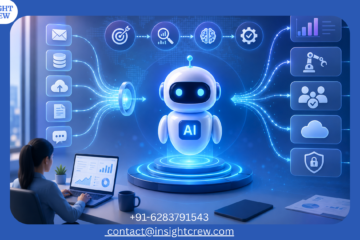
AI-native coding is a modern software development approach in which artificial intelligence serves as an active collaborator throughout the coding process, not just a helper for autocomplete.
Instead of developers writing every line manually, AI-native development uses AI agents and AI-powered IDEs to:
- Generate code
- Understand entire codebases
- Debug issues
- Write tests
- Refactor applications
- Build UI components
- Automate deployments
- Explain documentation
- Even create complete apps from prompts
How AI-native Coding Works
Traditional coding:
- The developer writes code manually
- Searches documentation
- Debugs errors
- Tests application
AI-native coding:
- The developer describes intent in natural language
- AI generates or modifies code
- AI explains errors and suggests fixes
- AI writes tests and documentation
- The developer reviews and guides the AI
The developer shifts from “typing code” to “directing systems”.
Key Characteristics
1. Natural Language Programming
Developers can write prompts like the following:
“Build a customer dashboard with login, charts, and export to PDF.”
AI converts the instruction into working code.
2. Context-Aware AI
Modern tools understand:
- Entire repositories
- APIs
- Frameworks
- Dependencies
- Project structure
This allows smarter suggestions than simple autocomplete.
3. Autonomous Coding Agents
Some AI tools can:
- Create files
- Run commands
- Fix bugs
- Execute tests
- Open pull requests
These systems behave more like junior developers.
4. Rapid Prototyping
Apps that once took weeks can now be built in hours.
Popular AI-native Coding Tools
IDEs & Coding Assistants
- Cursor – AI-first code editor with codebase understanding.
- GitHub Copilot – AI coding assistant integrated into IDEs.
- Replit AI – Browser-based AI coding environment.
- Windsurf Editor – AI agent-based development environment.
- Bolt.new – Generate full-stack apps from prompts.
AI Developer Platforms
Benefits of AI-native Coding
| Benefit | Description |
| Faster Development | Build software much more quickly |
| Lower Entry Barrier | Beginners can create apps with less coding knowledge |
| Better Productivity | Automates repetitive coding tasks |
| Faster Debugging | AI helps identify and fix errors |
| Improved Documentation | AI can generate explanations and docs |
| Rapid Experimentation | Easier to prototype ideas |
Challenges & Risks
| Challenge | Explanation |
| Incorrect Code | AI can generate bugs or insecure code |
| Over-Reliance | Developers may stop understanding fundamentals |
| Security Risks | Generated code may contain vulnerabilities |
| Hallucinations | AI may invent APIs or incorrect solutions |
| Maintenance Issues | Poorly reviewed AI code can become hard to manage |
Example of AI-native Development
A startup founder could type:
“Create a CRM dashboard with lead tracking, invoice generation, and WhatsApp integration.”
An AI-native platform may:
- Build frontend UI
- Create backend APIs
- Generate database schema
- Add authentication
- Deploy the application
with minimal manual coding.
Future of AI-native Coding
The industry is moving toward the following:
- Autonomous software agents
- Voice-driven development
- Multi-agent coding systems
- AI-generated full-stack applications
- Self-healing software systems
Developers will increasingly focus on:
- Architecture
- Product thinking
- Security
- AI supervision
- Business logic
rather than repetitive coding tasks.
AI-native coding does not replace developers; it changes the role from “manual coder” to “AI-guided software engineer”.
AI-native coding is a modern software development approach in which artificial intelligence serves as an active collaborator throughout the coding process, not just a helper for autocomplete.
Instead of developers writing every line manually, AI-native development uses AI agents and AI-powered IDEs to:
- Generate code
- Understand entire codebases
- Debug issues
- Write tests
- Refactor applications
- Build UI components
- Automate deployments
- Explain documentation
- Even create complete apps from prompts
How AI-native Coding Works
Traditional coding:
- The developer writes code manually
- Searches documentation
- Debugs errors
- Tests application
AI-native coding:
- The developer describes intent in natural language
- AI generates or modifies code
- AI explains errors and suggests fixes
- AI writes tests and documentation
- The developer reviews and guides the AI
The developer shifts from “typing code” to “directing systems”.
Key Characteristics
1. Natural Language Programming
Developers can write prompts like the following:
“Build a customer dashboard with login, charts, and export to PDF.”
AI converts the instruction into working code.
2. Context-Aware AI
Modern tools understand:
- Entire repositories
- APIs
- Frameworks
- Dependencies
- Project structure
This allows smarter suggestions than simple autocomplete.
3. Autonomous Coding Agents
Some AI tools can:
- Create files
- Run commands
- Fix bugs
- Execute tests
- Open pull requests
These systems behave more like junior developers.
4. Rapid Prototyping
Apps that once took weeks can now be built in hours.
Popular AI-native Coding Tools
IDEs & Coding Assistants
- Cursor: AI-first code editor with codebase understanding.
- GitHub Copilot – AI coding assistant integrated into IDEs.
- Replit AI – Browser-based AI coding environment.
- Windsurf Editor – AI agent-based development environment.
- Bolt.new – Generate full-stack apps from prompts.
AI Developer Platforms
Benefits of AI-native Coding
| Benefit | Description |
| Faster Development | Build software much more quickly |
| Lower Entry Barrier | Beginners can create apps with less coding knowledge |
| Better Productivity | Automates repetitive coding tasks |
| Faster Debugging | AI helps identify and fix errors |
| Improved Documentation | AI can generate explanations and docs |
| Rapid Experimentation | Easier to prototype ideas |
Challenges & Risks
| Challenge | Explanation |
| Incorrect Code | AI can generate bugs or insecure code |
| Over-Reliance | Developers may stop understanding fundamentals |
| Security Risks | Generated code may contain vulnerabilities |
| Hallucinations | AI may invent APIs or incorrect solutions |
| Maintenance Issues | Poorly reviewed AI code can become hard to manage |
Example of AI-native Development
A startup founder could type:
“Create a CRM dashboard with lead tracking, invoice generation, and WhatsApp integration.”
An AI-native platform may:
- Build frontend UI
- Create backend APIs
- Generate database schema
- Add authentication
- Deploy the application
with minimal manual coding.
Future of AI-native Coding
The industry is moving toward the following:
- Autonomous software agents
- Voice-driven development
- Multi-agent coding systems
- AI-generated full-stack applications
- Self-healing software systems
Developers will increasingly focus on:
- Architecture
- Product thinking
- Security
- AI supervision
- Business logic
rather than repetitive coding tasks.
AI-native coding does not replace developers; it changes the role from “manual coder” to “AI-guided software engineer”.