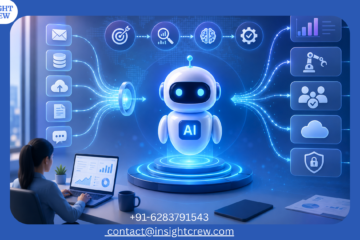
AI agents and MCP: Revolutionary Anthropic, the firm that created the Claude AI assistant, has an open-standard, open-source framework called the Model Context Protocol (MCP). It standardises how large language models (LLMs) and artificial intelligence (AI) interface with other tools and systems.
The AI community is quite excited about MCP, as is the case with any new model or project. However, we don’t care about the potential of a technology. Real-world solutions are important to us.
For this reason, I go over a recent client project in this piece and look at how MCP might provide a game-changing answer.
How does MCP operate, and what is it?
Let’s take some time to comprehend how the technology functions before moving on to real-world applications.
MCP can be viewed as a bridge that enables an AI agent to use a tool like that of a human.
Instead of completely rewriting the tool to incorporate AI, which is frequently unfeasible, particularly for sophisticated applications like web browsers or design platforms, MCP enables AI agents to interact with current systems naturally and effectively.
Consider providing an AI agent with a calculator and no further details. After training on billions of photographs, the agent might be able to visually identify it, but it wouldn’t be able to use it.
An AI agent can only “understand” calculators through verbal descriptions and visuals, whereas schoolchildren can quickly grasp how they operate. It cannot perform sums because it lacks the operating context.
However, companies can give specific instructions that enable the AI to behave like a human without altering the tool itself by setting up an MCP server between the AI agent and the tool.
A practical issue for an internet store
We received a complaint from our client, a multinational online shop with localised experiences in ten languages. All 10,000 of their product photos lacked descriptions. From the standpoints of accessibility, inclusivity, and SEO, that is not ideal.
The client wants to provide localised descriptions for each image to address this. That’s a huge undertaking: 100,000 distinct product descriptions.
A few years ago, hiring a dedicated team of writers and translators for six months would have been the only way to complete this work. For an issue that is now much simpler to resolve, that would have been a costly and time-consuming solution.
AI provides a quick and efficient fix
We were able to create a quicker and more affordable solution for the online shop because of AI. Using a comparatively straightforward design and Contentful’s REST APIs, two programmers were able to automate the work without requiring a sizable staff.
After identifying any missing descriptions, our solution created them in English, translated them into the other nine languages, and then pushed everything back to the CMS. Instead of taking six months, we completed all of the localised image descriptions in four weeks, which greatly exceeded the client’s expectations.
However, our solution was unique even if it worked. It was not reusable and was not adaptable. We could do better, I knew. Simply put, the technology was not yet available to us.
AI and MCP agents: An improved approach to problem-solving, reusing, and scaling
A few weeks ago, I went back to the problem with MCP and GitHub Copilot, an AI agent.
I started building an MCP server for Contentful using GitHub Copilot in agentic mode. Thirty minutes passed.
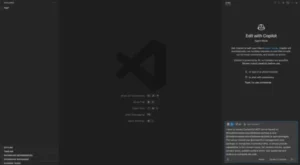
image 1: Requesting that the GitHub Copilot Agent create an MCP server for Contentful
After that, I set up a second MCP server to manage Google Gemini image descriptions, which took an additional fifteen minutes.
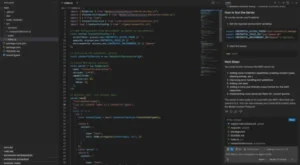
Image 2: GitHub Copilot’s fully operational MCP server for Contentful
Lastly, I created a thorough prompt to provide the AI agent instructions:
The entire project would take one to two weeks, even under the worst-case scenario of coding without Copilot support, project management, testing, and deployment overhead.
That takes a fraction of the time it would take an army of writers and translators and is twice as fast as our AI-powered approach.
However, speed isn’t the true advantage of MCP. It’s the solution’s adaptability. I spent more time teaching the AI bot how to utilise Contentful like a person than really creating a tool with MCP. I won’t have to redo the code the next time. I’ll compose a fresh prompt.
Code-based, one-time solutions can give way to agile, prompt-based operations with MCP. It has immense commercial potential and is a game-changer.
What if our entire architecture were subjected to MCP?
Consider the typical internet retailer’s business architecture.
These days, hard-coded connectors are used to link every system, including CRM, OMS, PIM, and e-commerce platforms. It requires time, money, and personnel to update many when one is changed.
For instance, it usually takes one or two weeks to export orders from an e-commerce platform to an OMS.
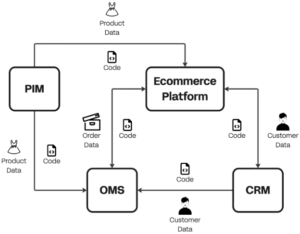
Image 3: A standard configuration of a hard-coded business process that relies on direct system integrations
But with MCP servers acting as adapters and AI agents as orchestrators, we remove the rigidity. A well-written prompt can replace weeks of development and take just a couple of hours.

Image 4: An AI agent coordinating corporate operations
Do you need to sync consumer information between your e-commerce platform and CRM? Simply write a prompt. Do you need to switch CRMs? Simply instruct the agent on how to operate the new one.
The change is significant:
- Embedded code gives way to customisable instructions for business logic.
- Maintenance is no longer restricted to specialised development teams and becomes quicker, less expensive, and more accessible.
- Business operations are becoming more AI-driven, flexible, and modular.
What would happen if we altered the system?
A new degree of long-term system flexibility is made possible by the combination of MCP and AI agents.
Consider a company that uses intelligent prompts to drive dozens of operational flows. They choose to use a different CRM one day.
Historically, this would result in expensive downtime, months of renovation, and rewritten integrations. However, the shift is much easier with an MCP-based architecture:
For the new CRM system, set up an MCP server.
Give the AI agent the most recent instructions.
Preserve current flows with the least amount of disturbance.
Under the direction of the MCP server, the AI agent automatically adjusts to the new system, preserving business continuity, cutting expenses, and fostering innovation.
This architecture eliminates the need for significant IT lift for system migrations and updates. They become prompt-driven and lightweight, changing the definition of agility in contemporary businesses.
Considering the future
This experience with MCP and AI bots demonstrates that they are more than just theoretical inventions. They are a very distinct (and successful) approach to resolving corporate issues.
The future is already here.
Official MCP servers are already being built by providers such as GitHub and Figma. Google is developing A2A (agent-to-agent) protocols. Agentic APIs will become the new norm alongside conventional REST APIs.
A new era of AI-led automation is upon us, one in which intelligent prompts replace complex integration code and more intelligent, flexible, adaptive, and human-centric models replace rigid business processes.