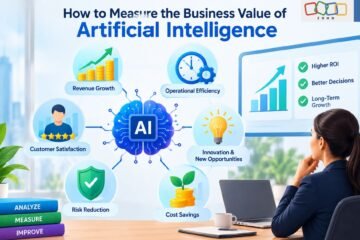
Businesses today create more data than ever before, ranging from digital transactions and IoT sensors to consumer interactions and backend systems. However, without cognitive tools, this raw data stays underutilised, confined in data silos and unable to inform business choices.
This is where artificial intelligence and data analytics come into play. AI allows businesses to transform raw data into real-time insights that drive growth, innovation, and efficiency by automating data processing and finding patterns from complicated, unstructured material.
AI is altering how organisations run and grow by anticipating consumer behaviour, simplifying supply chains, identifying abnormalities, and allowing improved forecasting. In this article, we’ll look at how AI transforms raw data into strategic insight, and why this transition is no longer optional, but rather necessary for being competitive.
Understanding AI and Data Analytics
At its heart, AI in data analytics refers to the automated collection, processing, and analysis of data at scale using artificial intelligence technologies such as machine learning and natural language processing. Unlike traditional approaches, which rely on static rules and human queries, AI-powered systems adapt and learn from data, resulting in continually enhanced insights over time.
What Does Artificial Intelligence Mean for Data Analytics?
AI employs a variety of advanced methodologies to discover insights and produce commercial value:
Machine Learning and Business Forecasting
Machine learning models find trends in previous data and make accurate predictions, such as estimating demand, detecting anomalies, and personalising client experiences, all without requiring manual programming.
Natural Language Processing (NLP) for unstructured data
Natural Language Processing (NLP) enables AI systems to interpret and analyse human language, whether it comes from emails, support tickets, social media comments, or survey responses. NLP enables organisations to make sense of unstructured data that traditional technologies frequently ignore.
Predictive Analytics using AI: AI-powered algorithms predict previous patterns and future consequences. Predictive analytics provides company executives with data-driven insight into everything from customer turnover to logistical optimisation.
AI versus Traditional Data Analytics
Traditional data analytics uses static models, spreadsheets, and dashboards with minimal automation. It is reactive, reliant on human-led querying, and frequently restricted by time and resource constraints.
- AI-powered data analytics automates learning and improvement.
- Handles both organised and unstructured data.
- Provides real-time insights.
- Scales across terabytes of data with ease.
- Transitions from descriptive to predictive and prescriptive analysis.
- By going beyond reporting, AI transforms analytics into a strategic growth engine, enabling firms to act, adapt, and compete in real time.
Why AI Is Important for Addressing Modern Data Analytics Challenges
In this era of tremendous digital expansion, organisations are dealing with more data than ever before. However, traditional data analytics methodologies are struggling to keep up with the volume, velocity, and diversity of data being created. This is where artificial intelligence becomes more than just handy; it is crucial for modern companies.
The Limitations of Traditional Data Analysis
Traditional data analytics procedures involve manual data preparation, predetermined reporting formats, and a review of previous performance. As data grows in complexity and speed, these traditional approaches create bottlenecks.
Volume :
Businesses frequently acquire terabytes of data each day, ranging from consumer transactions to online behaviour records.
Velocity:
Real-time data streams from applications, IoT devices, and cloud platforms require immediate processing.
Variety:
Structured databases, text, video, social media, and other data types exist in a variety of forms, necessitating flexible analytic methodologies.
Without automation, a team of data professionals would spend more time cleaning, organising, and processing data rather than evaluating and acting on it.
How AI Overcomes These Challenges.
AI in data analytics provides a paradigm change by automating and speeding up the data lifecycle:
Automated Data Processing
AI solutions help with data input, cleaning, labelling, and normalisation. This avoids human mistakes and greatly decreases preparation time.
Real-time Data Insights
Businesses may use AI to analyse data as it comes in, delivering real-time insight that allows them to make quicker, more educated choices.
Scalable Big Data Analytics
AI platforms can handle enormous amounts of organised and unstructured data with ease. This level of big data analytics enables organisations to analyse complicated information beyond the capabilities of standard technologies or manual data analysts.
AI enables faster business choices by identifying patterns, anomalies, and trends across supply chain, finance, and operations. This allows data-driven initiatives that are speedier, more accurate, and in line with company objectives.
AI does more than merely accelerate analysis; it elevates it. By making sense of complicated, high-speed data environments, AI enables businesses to shift from reactive reporting to proactive, insight-driven action.
Key Features and Advantages of AI-Powered Data Analytics for Business
The genuine potential of AI-powered data analytics extends well beyond speed and processing scalability. For modern enterprises, the true benefit is their capacity to provide precise, actionable, and forward-thinking insights that drive better decisions. Whether you’re managing operations, projecting revenue, or boosting customer interaction, AI adds a new level of intelligence and adaptability to how your company handles data.
Here are the most important characteristics and commercial benefits of using AI for data analytics:
- Automatic Data Cleaning and Error Reduction
Messy, inconsistent, or incomplete data is one of the most significant impediments to accurate analysis. For most firms, manually cleansing this data takes time and is prone to errors, resulting in inaccurate insights and poor decision-making.AI automates data preparation with clever algorithms that:
Detect and remove duplicate entries.
Identify abnormalities and contradictions.
Standardise data formats across numerous sources, including CRM, ERP, and marketing systems.
Fill in missing data intelligently using contextual learning.
What was the result? Clean, high-quality data that your team of specialists can rely on. With more reliable datasets, your company can make decisions faster and with a lower likelihood of error.
- Real-time dashboards and AI-powered visualisations
The days of static reporting and out-of-date spreadsheets are over. AI-powered analytics tools, such as Microsoft Power BI, Tableau, and Looker, now incorporate machine learning to deliver real-time data insights through interactive dashboards.
The key capabilities include:
Live updates as data comes in from operations, sales, and customer channels.
Automatically detecting and identifying abnormalities or developing patterns.
Personalised dashboard displays depending on user roles, preferences, or previous behaviour.
These sophisticated dashboards provide executives with a clear, real-time perspective of business performance and the flexibility to respond fast when things change.
- Predictive Analytics for Smarter Forecasting.
AI does more than simply educate you about what happened; it also helps you forecast what will happen next. AI models may produce predictive insights specific to your company’s goals by analysing historical patterns, seasonal trends, and external influences.
Use cases include:
- Forecasting product demand with greater accuracy
- Identifying Customers at Risk of Churn
- Improving inventory levels and supply chain planning
- Forecasting cash flow or revenue patterns.
Predictive analytics allows you to change from reactive to proactive decision-making and remain ahead of the competition.
- Natural language processing for unstructured data.
Your company most certainly collects large volumes of unstructured data, ranging from technical logs and internal reports to research notes and feedback forms. Historically, this data has been difficult to analyse. Enter Natural Language Processing (NLP). This AI technology converts unstructured input into relevant business insights by:
Extracting client sentiment (positive, negative, and neutral).
- Identifying similar difficulties and repeating themes
- NLP allows organisations to discover hidden patterns in raw data, assisting executives in understanding consumer behaviour, improving decision-making, and aligning strategy with real-world insights.
- Improved accuracy and operational efficiency.
One of the primary benefits of AI is its capacity to continually learn and improve over time. As your company creates more data, AI models improve accuracy and efficiency, automating complicated activities with minimal human intervention.
Key advantages include:
- Faster transition from data gathering to meaningful insights
- Reduced dependence on manual analysis or gut feeling.
- Consistent, data-driven decision-making among departments
By incorporating AI into your data analytics process, your company receives a scalable, always-on intelligence engine that continues to improve.
How AI Converts Raw Data Into Real-Time Business Decisions.
Today, organisations create massive amounts of data every second, ranging from sales transactions and customer feedback to website traffic and social media interactions. However, raw data alone does not bring value. It’s frequently unstructured, spread across several systems, and difficult to comprehend.
This is where artificial intelligence in data analytics comes into play. It enables firms to convert complicated data into clear, dependable, and actionable business insights more quickly and accurately than traditional techniques.
Here’s how AI enables this transformation:
- Bringing Data Together (AI-powered Data Collection)
AI takes data from a variety of corporate platforms, including CRM, ERP, websites, social media, and IoT devices. This contains both.
Structured data (such as customer profiles, sales reports, and inventories)
Unstructured data (such as emails, support tickets, and reviews)
By consolidating all data sources, AI provides company executives with a comprehensive and uniform picture of operations, consumer behaviour, and performance.
- Automatic Cleaning and Preparation of Data
Messy data leads to poor judgments. AI technologies clean and organise your data automatically.
- Removing duplicates and correcting mistakes
- Standardising various formats (dates, currencies, and labels)
- Filling up missing information using clever algorithms
This guarantees that your reports and dashboards are based on dependable, high-quality data, allowing you to make informed decisions rather than guessing.
- Identifying Patterns and Predicting Results
AI employs clever algorithms to analyse your data and reveal insights you may have missed, such as:
- Trends in customer purchasing behaviour
- Signals indicating that clients could depart
- Sales trends are connected to certain times, goods, or places.
It does more than simply tell you what occurred; it also explains why it happened and what could happen next, allowing you to respond quickly and confidently.
- Visualising insights with real-time dashboards
AI integrates with programs like Power BI, Tableau, or Looker rather than sorting through spreadsheets to provide you with:
- Dashboards that update automatically in real time
- notifications of anomalous activity or performance declines
- Clearly shown projections, KPIs, and trends
Teams and business owners can more easily identify problems, monitor progress, and make prompt, well-informed decisions as a result.
The Lifecycle of AI-Powered Data Analytics
Organisations must take a methodical and strategic approach to use AI to derive true business value from data. The AI-powered data analytics lifecycle is outlined below, with each stage intended to maximise effect and promote well-informed decision-making.
- Establish Specific Business Goals
Start with a clear company objective. A clear goal gives focus and guarantees that the data analytics effort is in line with company priorities, whether the goal is improving customer retention, predicting product demand, or optimising supply chain operations.
- Collect and Prepare High-Quality Information
Data is frequently dispersed over several systems, including marketing tools, transactional databases, CRM platforms, and outside sources. This data must be cleansed, standardised, and combined into a readable format for AI models to function properly. Reliable outputs require high-quality input.
- Pick the Appropriate Analytics and AI Tools
The amount, complexity, and team expertise of the data all play a role in selecting the right technologies. Strong capabilities for data modelling, automation, and data visualisation are provided by platforms like Power BI, Tableau, Google Cloud AI, and Microsoft Azure Machine Learning. Experts can scale well with the correct tech stack.
- Utilise models for machine learning
AI models can be used to find patterns, predict trends, and produce insights when suitable data and tools are available. Companies can create custom models to handle certain possibilities and difficulties or employ pre-made models for rapid victories.
- Share and Visualise Your Findings Clearly.
Insights need to be actionable and easily available. Raw data is transformed into user-friendly dashboards, interactive reports, and visual summaries using data visualisation technologies. These resources facilitate quicker, more certain decision-making by assisting stakeholders in quickly comprehending important facts.
- Make Data-Driven Choices
Execution is where data analytics really shines. Through strategy adjustments, workflow automation, and quicker, more intelligent decision-making that directly affects revenue, efficiency, and customer happiness, artificial intelligence (AI) enables businesses to get from analysis to action.
AI Data Analytics Solutions from SculptSoft: Designed for Business Impact
At SculptSoft, we recognise that every company has a different data landscape and set of difficulties. We don’t provide analytics tools that are universally applicable because of this. Rather, we design custom AI-driven data analytics solutions that fit your unique objectives, systems, and scale.
We assist you in creating an intelligent and actionable data architecture, whether your goals are to increase operational visibility, forecast more precisely, or obtain deeper consumer insights.
Here’s how we produce outcomes of enterprise calibre:
Complete AI Data Approach
We start by learning about your company’s objectives, data maturity, and problems. Our data analysts collaborate with your executive team to develop a plan that optimises the value of your data, from choosing the best AI models and platforms to establishing KPIs.
Custom AI Model Development
When it comes to real-world complexity, off-the-shelf models frequently fall short. SculptSoft creates unique deep learning and machine learning models based on your industry, consumer behaviour, and data types. We provide intelligent suggestions, churn prediction, and demand forecasting.
Contemporary Data Integration & Infrastructure
We combine information from your marketing systems, CRM, ERP, finance tools, and customer support platforms into a single, AI-ready data warehouse. Our interconnections remove silos that impede the creation of insights while guaranteeing accuracy and real-time flow.
Smart Visualisations & Interactive Dashboards
Using technologies like Power BI, Looker, or Tableau, we create user-friendly, role-specific dashboards that are enhanced with AI to provide real-time insights, trends, and anomaly warnings. Every stakeholder, from operations to the C-suite, is empowered by these dashboards to confidently act on data.
Cloud Deployments That Are Secure & Scalable
Because our data analytics solutions are based on cloud-native, scalable architectures like AWS, Azure, and GCP, your AI infrastructure will expand along with your company. To protect your data assets, we also place a high priority on enterprise-grade security, governance, and compliance.
Continuous Optimisation & Model
Monitoring AI advances over time; it doesn’t stop with deployment. To make sure your models remain accurate, current, and in line with changing business requirements, we employ lifecycle monitoring, performance tweaking, and retraining pipelines.
SculptSoft’s AI data analytics services help you make better decisions more quickly, whether you’re a fast-growing tech firm or a mid-sized enterprise. Our strategy is results-driven, tech-savvy, and business-first.
Concluding Remarks
AI-powered, intelligent, automated, and highly strategic, the transition from raw data to actual business intelligence is no longer a laborious, human procedure. Businesses in a variety of sectors are utilising AI in data analytics to find trends, forecast results, and influence choices that promote expansion, effectiveness, and competitive advantage.
AI enables businesses to comprehend not only what is happening but also why it is occurring and what to do next, whether through real-time dashboards, predictive models, or NLP-driven unstructured data analysis.
Adopting AI in data analytics is not a fad for businesses that wish to stay flexible and insight-driven. It’s essential for business.