In today’s fast-moving business environment, organisations are under constant pressure to make quicker, smarter, and more accurate decisions. Traditional analytics tools help teams understand what happened in the past, but modern businesses need systems that can go beyond dashboards and reports. They need analytics that can think, recommend, automate, and act.
This is where agentic analytics comes in.
Agentic analytics represents the next evolution of business intelligence, in which AI-powered systems not only analyze data but also autonomously assist with decision-making, identify opportunities, trigger workflows, and continuously learn from outcomes.
What Is Agentic Analytics?
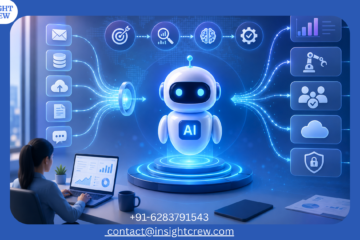
Agentic analytics combines artificial intelligence, automation, machine learning, and contextual business intelligence to create systems that behave like intelligent agents.
Instead of waiting for users to ask questions or manually interpret reports, agentic analytics systems can:
- Continuously monitor business data
- Detect anomalies and trends in real time
- Recommend actions based on insights
- Automate responses and workflows
- Learn from historical outcomes
- Collaborate with users through natural language interactions
In simple terms, agentic analytics transforms analytics from a passive reporting tool into an active business partner.
From Traditional Analytics to Intelligent Action
Traditional analytics typically answers questions like the following:
- What happened?
- Why did it happen?
- What might happen next?
Agentic analytics goes one step further:
- What should we do now?
- Can the system take action automatically?
- How can decisions improve continuously over time?
This shift enables organisations to move from reactive operations to proactive and autonomous decision-making.
Key Capabilities of Agentic Analytics
1. Real-Time Insight Generation
Agentic systems continuously analyse incoming data streams from CRM platforms, ERP systems, customer support channels, IoT devices, marketing tools, and more.
Instead of waiting for weekly reports, businesses receive instant insights and recommendations.
Example:
A sales leader receives an alert that conversion rates are dropping in a specific region, along with AI-generated recommendations to adjust pricing or reassign leads.
2. Autonomous Decision Support
Agentic analytics can evaluate multiple variables simultaneously and suggest the best course of action.
For example:
- Identifying high-risk customers likely to churn
- Recommending inventory restocking strategies
- Predicting project delays before they happen
- Suggesting optimal pricing models
These systems reduce the time spent on manual data analysis and accelerate strategic decision-making.
3. Workflow Automation
Modern analytics platforms can trigger automated actions based on insights.
Examples include:
- Automatically escalating critical support tickets
- Sending alerts to managers when KPIs decline
- Launching marketing campaigns based on customer behaviour
- Updating CRM records intelligently
This creates a seamless connection between analytics and execution.
4. Conversational Intelligence
With natural language interfaces, users can interact with analytics systems conversationally.
Instead of creating complex reports manually, users can simply ask:
- “Which products generated the highest profit this quarter?”
- “Why did customer retention drop last month?”
- “Show me underperforming sales territories.”
AI agents provide immediate answers, visualisations, and recommendations.
5. Continuous Learning
Agentic systems improve over time by learning from outcomes and user feedback.
If a recommendation consistently delivers positive results, the system strengthens similar decision patterns. If outcomes are poor, it adapts future recommendations accordingly.
This creates a smarter and more adaptive analytics ecosystem.
Benefits of Agentic Analytics
Faster Decision-Making
Businesses no longer need to spend hours compiling reports and analysing spreadsheets. Intelligent agents surface the most important insights instantly.
Improved Accuracy
AI-driven analytics reduces human bias and identifies patterns that may otherwise go unnoticed.
Increased Productivity
Teams can focus on strategic initiatives while repetitive analysis and monitoring tasks are automated.
Better Customer Experiences
Real-time insights enable businesses to personalise customer interactions, predict customer needs, and resolve issues proactively.
Enhanced Agility
Organizations can respond quickly to market changes, operational disruptions, and emerging opportunities.
Real-World Use Cases
Sales and CRM
Agentic analytics helps sales teams:
- Prioritise high-conversion leads
- Forecast revenue accurately
- Detect stalled deals
- Recommend next-best actions
Customer Support
Support teams can:
- Predict ticket escalation risks
- Automate issue routing
- Monitor customer sentiment
- Improve response times
Manufacturing and Operations
Manufacturers can:
- Predict equipment failures
- Optimize supply chains
- Reduce downtime
- Improve production planning
Finance
Finance teams use agentic analytics for:
- Fraud detection
- Cash flow forecasting
- Expense optimization
- Risk assessment
Marketing
Marketing departments can:
- Identify high-performing campaigns
- Personalise customer journeys
- Predict campaign ROI
- Optimize ad spending
The Role of AI Agents in Business Intelligence
AI agents are becoming central to modern analytics platforms. These intelligent systems can independently perform tasks such as the following:
- Collecting and organising data
- Running predictive models
- Monitoring KPIs
- Generating reports
- Triggering automated workflows
As organisations adopt AI-first strategies, analytics platforms are evolving into collaborative digital assistants that work alongside human teams.
Challenges to Consider
While agentic analytics offers significant advantages, organisations must also address the following:
- Data quality and governance
- AI transparency and explainability
- Privacy and compliance requirements
- Integration with existing systems
- Human oversight and accountability
A balanced approach combining AI automation with human expertise is essential for successful adoption.
The Future of Decision Intelligence
The future of analytics is not just about generating insights; it is about enabling intelligent action.
As AI technologies continue to evolve, agentic analytics will become more autonomous, context-aware, and predictive. Businesses that embrace this transformation will gain faster insights, stronger operational efficiency, and a significant competitive advantage.
Organisations that continue relying solely on traditional dashboards may struggle to keep pace with rapidly changing business environments.
Conclusion
Agentic analytics is redefining how businesses make decisions. By combining AI, automation, and real-time intelligence, organisations can move beyond static reporting toward proactive, intelligent operations.
The result is faster decision-making, improved efficiency, better customer experiences, and smarter business outcomes.
In a world driven by data, the companies that succeed will be those that can not only analyse information quickly but also act on it intelligently.