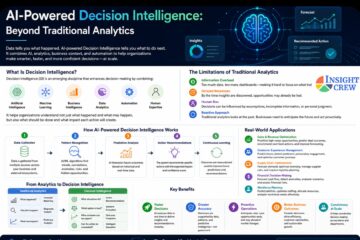
From AI Investment to Measurable Business Results
Artificial Intelligence is transforming businesses by improving efficiency, automating processes, and supporting better decision-making. However, implementing AI is not enough. Businesses must measure the value it delivers.
Organizations need to understand whether their AI investments are reducing costs, increasing revenue, improving customer experiences, or creating new opportunities.
This blog explores practical ways to measure the business value of Artificial Intelligence.
1. Define Clear Business Objectives
Before implementing AI, identify what your business wants to achieve.
Your objectives might include:
- Reducing operational costs
- Increasing employee productivity
- Improving customer satisfaction
- Increasing sales conversions
- Automating repetitive tasks
Example: A company introduces an AI chatbot to reduce customer support response times and improve service efficiency.
Clearly defined objectives help you connect AI implementation to measurable business outcomes.
2. Measure Financial Impact
One of the most important ways to evaluate AI is by measuring its financial contribution.
Key metrics:
- Revenue growth
- Cost savings
- Return on Investment (ROI)
- Cost per transaction
- Revenue per employee
AI ROI Formula
AI ROI (%) = (Net Benefits ÷ Total AI Investment) × 100
Your total investment should account for implementation, integration, training, infrastructure, and ongoing operating costs.
Financial outcomes should be measured using actual results rather than assumptions.
3. Track Operational Efficiency
AI can help businesses streamline workflows and reduce manual effort.
Consider tracking:
| Metric | What It Measures |
| Time Saved | Reduction in task completion time |
| Productivity | Output per employee or team |
| Error Rate | Changes in process accuracy |
| Automation Rate | Percentage of tasks automated |
| Processing Time | Speed of business operations |
Example: An AI-powered document processing system reduces manual data entry and allows employees to focus on higher-value activities.
4. Evaluate Customer Experience
AI can influence how customers interact with your business.
Important metrics include:
- Customer satisfaction (CSAT)
- Customer retention
- Response time
- Conversion rate
- First-contact resolution
- Customer service costs
For example, an AI assistant may provide faster responses, but its business value should also be evaluated through customer satisfaction and successful issue resolution.
5. Measure Employee Productivity
AI should be evaluated based on how it supports employees, not simply how frequently it is used.
Track:
- Time spent on repetitive tasks
- Task completion rates
- Quality of work
- Employee adoption
- Employee satisfaction
Important: Time saved does not automatically equal financial savings. Assess whether the saved time translates into additional output, reduced costs, or other measurable benefits.
6. Compare Performance Before and After AI
Establish a baseline before implementing AI.
For example:
| Business Metric | Before AI | After AI |
| Customer response time | 24 hours | 4 hours |
| Manual processing | 6 hours | 2 hours |
| Data entry errors | 8% | 3% |
| Customer satisfaction | 75% | 88% |
The figures above are illustrative examples, not measured results.
Comparing performance over time helps businesses identify whether AI is contributing to improvements.
7. Consider Long-Term Strategic Value
AI can create benefits that are not immediately reflected in revenue.
These may include:
- Faster decision-making
- Improved business intelligence
- New product opportunities
- Greater scalability
- Improved risk management
- Stronger competitive capabilities
Businesses should track both immediate financial outcomes and longer-term strategic benefits.
8. Continuously Monitor and Optimize
AI value measurement should be an ongoing process.
Regularly review:
- AI implementation costs
- Business performance metrics
- System accuracy and reliability
- User adoption
- Customer feedback
- Return on investment
As usage grows, monitor operating costs and performance to ensure the AI solution continues delivering value.
The Future of AI Business Value
The success of AI should not be measured only by the technology implemented. It should be measured by the real improvements it delivers to business performance.
From improving sales operations to automating customer support, organizations need a clear framework that connects AI capabilities with measurable business objectives.
Conclusion
AI creates business value when innovation translates into measurable impact.
Define your goals, track meaningful KPIs, evaluate costs, and continuously improve your AI strategy.